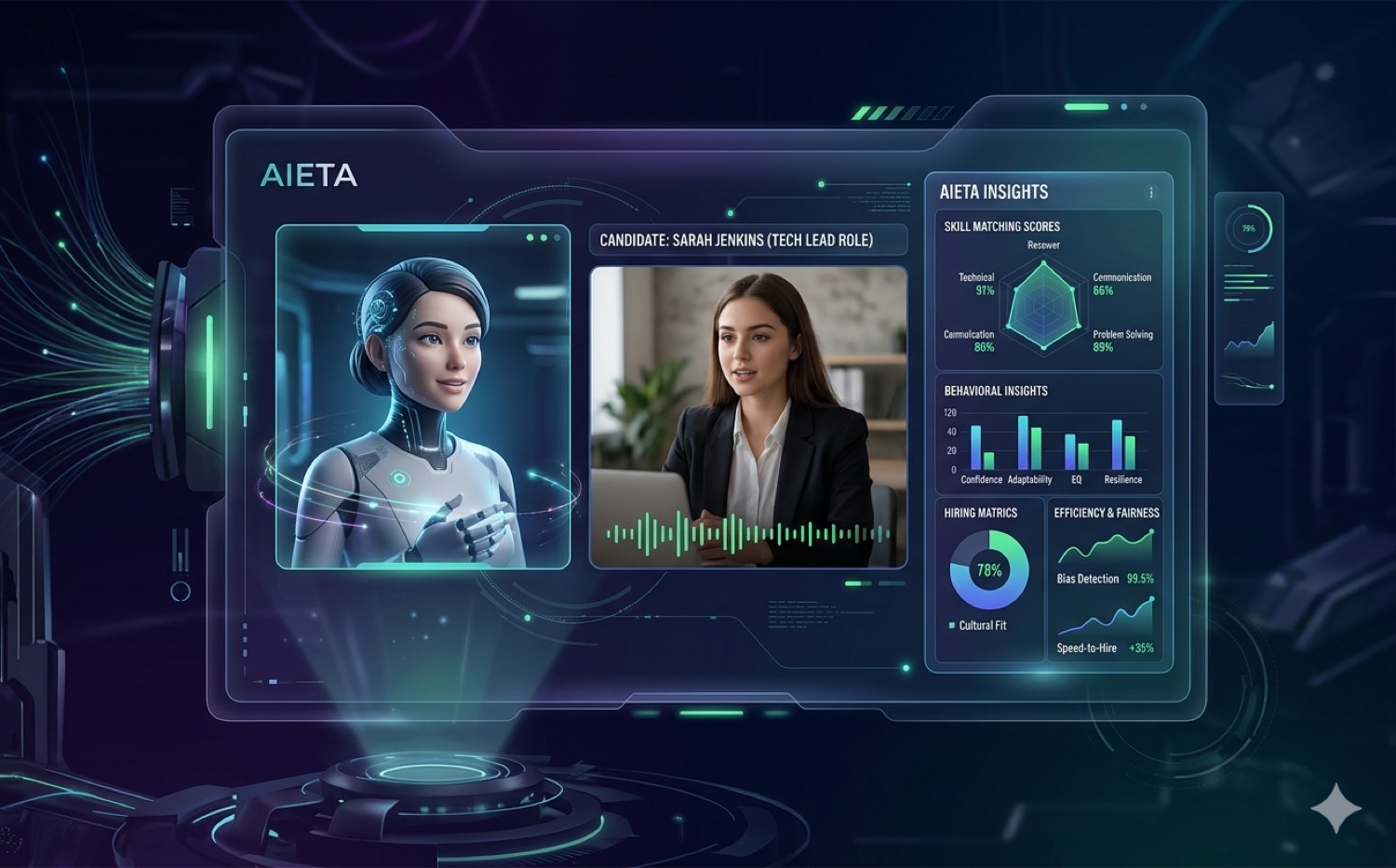
AIETA
Not about large language models, or interview automation.
It's about whether a candidate is judged on evidence or on the impression they happened to make that morning.
Not AI that replaces them. Every product we ship is an application of one question — and the technology is the means, never the point.
The AI surfaces evidence. The human decides. AIETA — human override at every gate
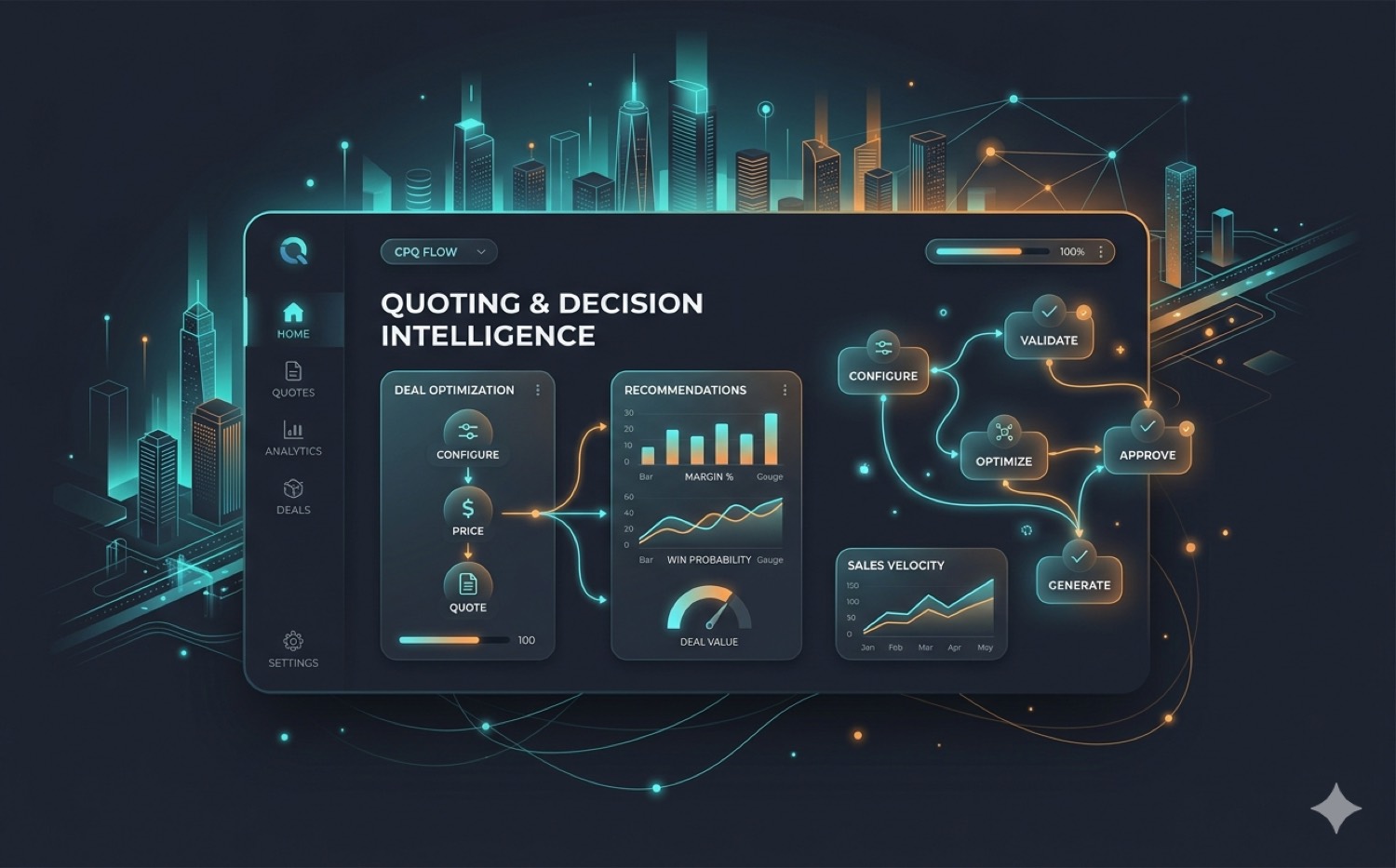
Knowledge out of one head, into the system AMBIENT CPQ — explainable commercial outcomes
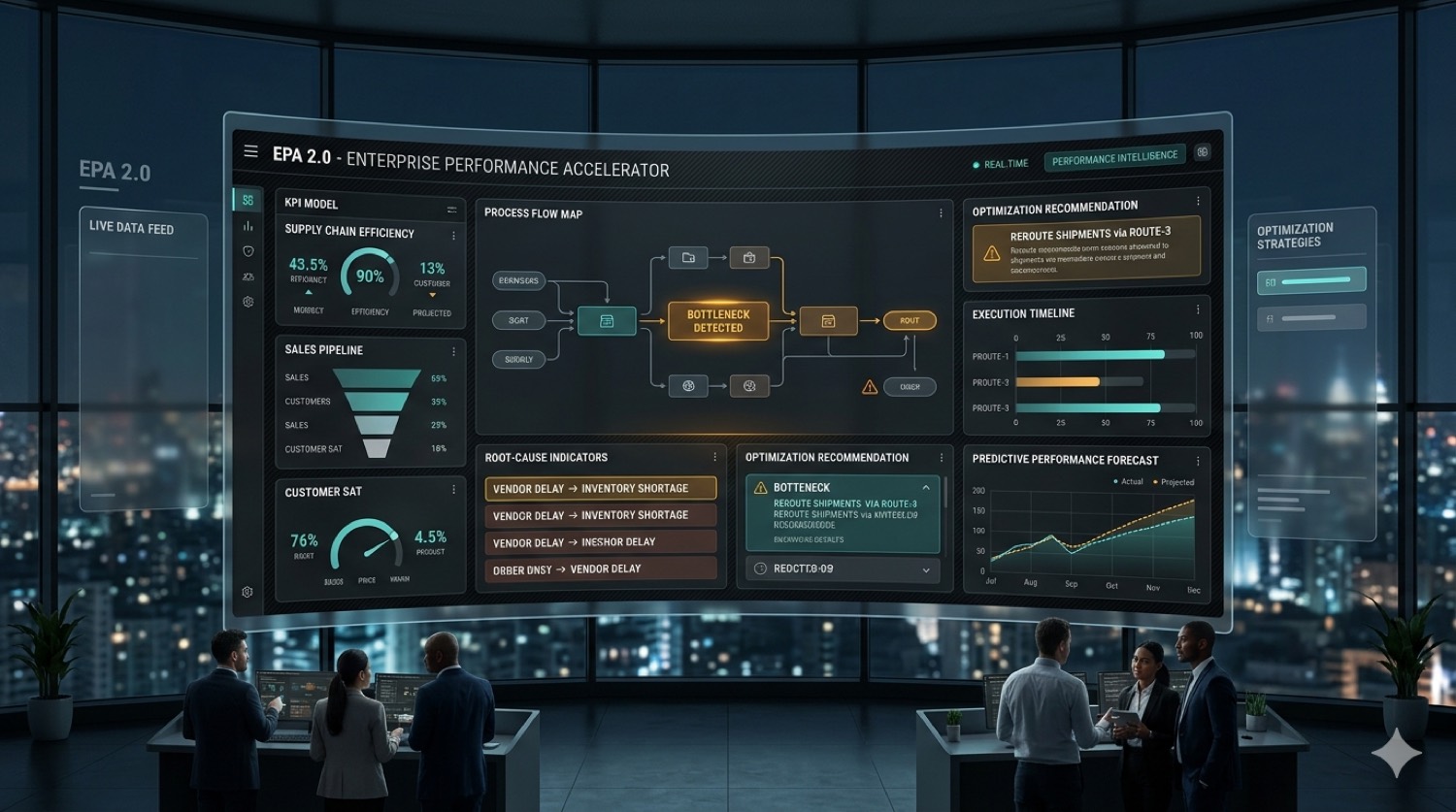
An organisation that can see itself clearly EPA 2.0 — observe, detect, infer
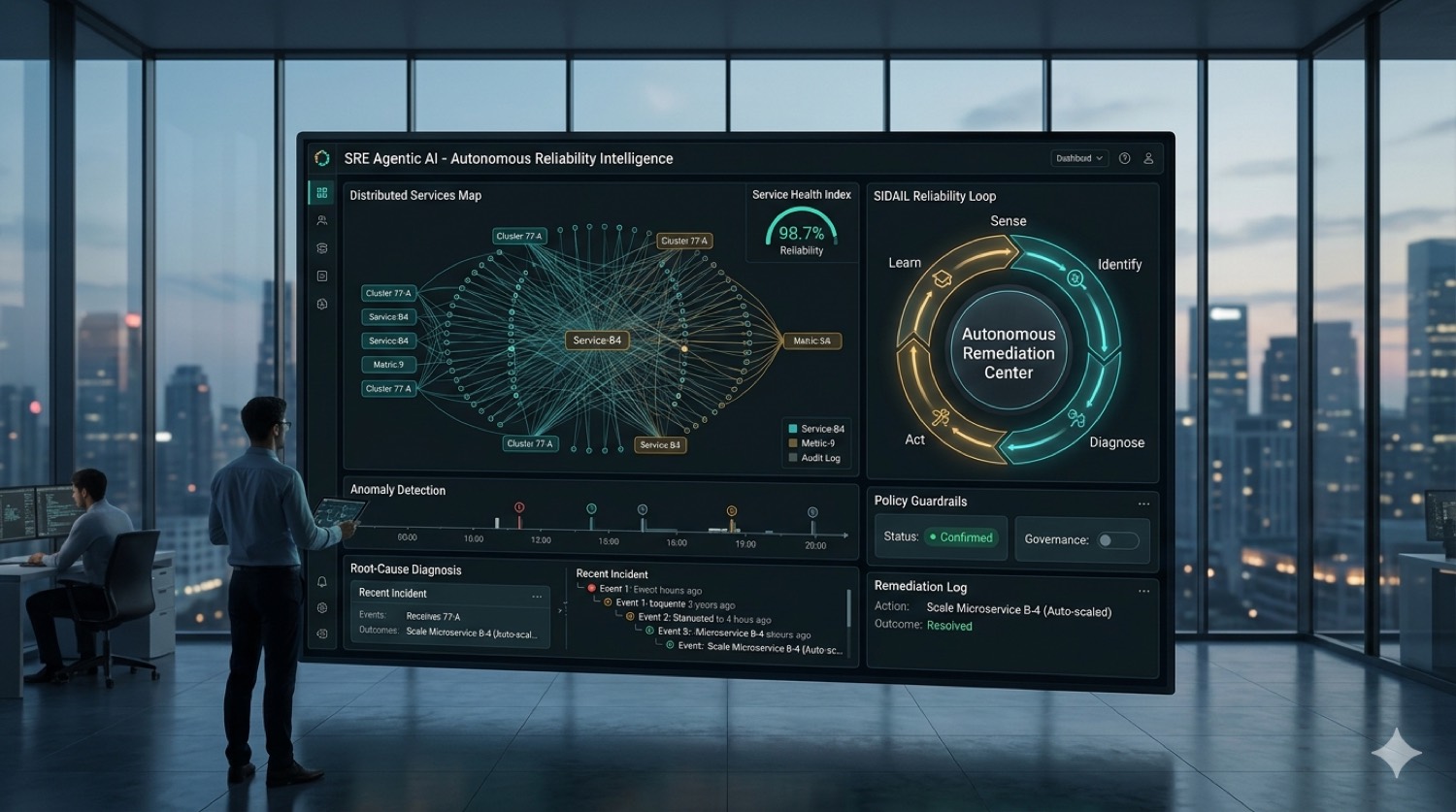
Autonomy inside guardrails you set SRE Agentic AI — the SIDAIL loop
That is the whole research programme, and every product in the suite is one application of it. The technology is the enabling layer, not the contribution. What we are actually building is the answer to that question, one workflow at a time.
Most AI engineering starts by asking how AI can solve a problem. We start by asking why the problem exists at all — and whether AI deserves to be part of the answer. Six products, six reframes.
Not about large language models, or interview automation.
It's about whether a candidate is judged on evidence or on the impression they happened to make that morning.
Not about voice AI, or screening at volume.
It's about giving recruiters back the hours that only a human can spend well — judgement, persuasion, relationships.
Not about configure-price-quote software.
It's about whether commercial knowledge lives in one architect's head, or in a system every seller can reason with.
Not about MongoDB, or SQL, or any particular data platform.
It's about reducing transformation failure — the quiet, expensive way that good organisations lose years.
Not about dashboards, or operational reporting.
It's about whether an organisation can see itself clearly enough to adapt while adapting still costs little.
Not about incident automation, or alert reduction.
It's about engineers who stop firefighting at 3am and start doing the engineering they were hired for.
A product decision is never contained. It lands on a person, changes how a team works, shifts what an organisation can attempt — and, at scale, alters what a society considers normal. We design for all four at once.
A candidate assessed on structured evidence rather than rapport. A recruiter whose day contains fewer low-signal calls. An engineer who sleeps through the night because the system handled a known pattern.
Knowledge stops living in the two people who happen to hold it. Evaluation becomes comparable across interviewers, pricing consistent across sellers, diagnosis repeatable across on-call rotations.
Margin holds because the floor is enforced rather than remembered. Transformation risk falls because validation gates block rather than warn. The organisation can see its own operating state and adapt while adapting is still cheap.
Hiring that is structured and documented is hiring that can be examined. Enterprise capability that compounds is capability that does not depend on scarce expertise. What a system makes easy, it eventually makes normal — so what it makes easy matters.
Not a copilot bolted onto a workflow. An intelligence layer that runs continuously underneath the organisation — sensing state, surfacing what changed, and proposing the next action while a human still holds the decision.
 View full size
Copilots answer questions about a workflow. They never own an outcome, so nothing moves. What changes the number is a system that runs the workflow end to end — inside your rules, against your data, with a human on the final gate.
The distinction every product in the suite is built onAugmenting capability is easy if you are willing to take the decision away. We are not. These five constraints are written into every product before a line of model code is touched.
AI generates and evaluates. A person decides, and can override at any point in the chain without penalty or friction.
Why this score, why this price, why this supplier, why this remediation. A recommendation without a rationale is not a recommendation.
Full lineage from input to outcome, queryable after the fact. Decisions that cannot be examined cannot be trusted at scale.
Systems act freely inside boundaries you define, and escalate with full context the moment a situation falls outside them.
A good system leaves the team more able without it, not less. If removing the AI leaves people worse than before, we built the wrong thing.
Claims we make about outcomes are measured from live deployments, with the basis published. Building is not the same as proving.
Thirty minutes, one workflow, and a straight answer on whether a Rupadi product moves it — or whether it needs building.